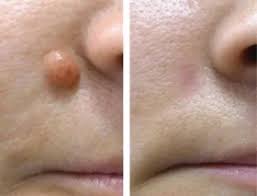
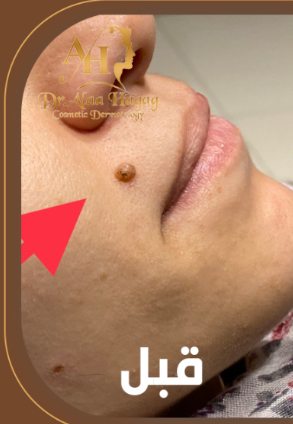
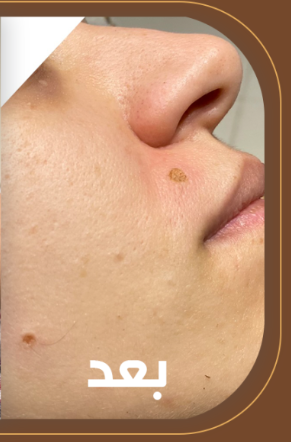
Skin tags are small, loose growths of tissue that protrude from the skin and remain attached to it. They are generally harmless and commonly appear on the neck, chest, back, armpits, under the breasts, or inner thighs.
Skin tags are more common in women, especially those who are overweight, and also in older adults.
Skin tags themselves are painless, but they can cause skin irritation from friction against clothing or jewelry.
Causes of Body Tags
1. Friction and Sweating
Excessive sweating is a major cause of body tags. Areas prone to sweating often lack proper ventilation, especially the abdomen, thighs, underarms, and buttocks. The increased friction between these areas and clothing leads to moisture buildup, making them particularly susceptible to developing body tags.
2. Obesity
Obesity is a primary cause of body tags. Overweight and obese individuals are more prone to developing them.
3. Age
Age is another contributing factor. The likelihood of developing body tags increases with age. It's important to note that body tags vary in size and color from person to person.
4. Genetic Factors
Genetics plays a significant role in the development of many diseases, including body tags. A family history of body tags increases the risk of developing them, and they often appear in the same location within the same family. 4. Crohn's Disease
Having Crohn's disease increases the likelihood of developing skin tags around the anus.
5. Pregnancy
During pregnancy, women undergo many hormonal changes that can lead to the appearance of skin tags on the neck and abdomen. However, these tags usually disappear gradually after childbirth.
6. Skin Cancer
Skin tags can be a sign of skin cancer, but only in its early stages.
7. Human Papillomavirus (HPV)
HPV is a virus that infects DNA, leading to skin infections. This infection can cause the appearance of skin tags, hence the name of the disease.
Types of Skin Conditions
1- Internal Pimples
These resemble pimples but are harder to the touch. They are among the most common types as they are firm to the touch. They appear when skin pores become clogged with dead skin cells and bacteria. They are usually small and may be dome-shaped or flat. They can be treated with natural remedies, and if these are ineffective, a doctor may prescribe medication.
2- Skin Tags
These grow due to excess collagen but are harmless and purely cosmetic. They are small, soft growths that hang from the skin. They are very common and are most often found on the neck, armpits, and under the breasts. They can also appear on the eyelids or in some sensitive areas. They are particularly common in older adults, those who have gained weight, or during pregnancy.
These are the most common type of skin condition. 3. Basal Cell Carcinoma
This is a type of non-melanoma skin cancer that develops in the outermost layer of the skin. More than 100,000 new cases of non-melanoma skin cancer are diagnosed in the UK each year. According to the National Health Service (NHS), it is usually caused by intense sun exposure. It affects men more often than women and is more common in older adults. It rarely spreads beyond the original tumor site, but if left untreated, it can damage nerves and muscles.
4. Melanoma
This is the most dangerous type of skin cancer. It can affect any area of the body's skin, as it grows deep within the skin and can affect lymph nodes and blood vessels. The most commonly affected areas are the back in men and the legs in women. Survival rates vary depending on the specific case.
5. Actinic Keratosis
Actinic keratosis typically appears as dry, scaly patches. If left untreated, it can lead to cancer. The condition manifests as dry, scaly patches due to long-term sun exposure. These patches can be pink, red, or brown and are most commonly found on the face, particularly the nose, forehead, forearms, and backs of the hands. The patches are usually harmless and sometimes disappear on their own. However, they can become cancerous if left untreated.
6. Hemangiomas
Hemangiomas are a type of non-cancerous growth that can develop on the skin due to an abnormal cluster of blood vessels. The most common type is a nevus, which appears as a red, nodular growth. They can occur anywhere on the body but are most commonly found on the face, scalp, chest, or back.
Surgical Procedures for Skin Tag Removal
A doctor can remove skin tags according to their size and location using various methods, including:
1. Cauterization: Used to remove skin tags and close wounds.
2. Cryosurgery: Used to freeze skin tags using liquid nitrogen.
3. Surgical Excision: Used to remove skin tags at their base using surgical scissors.
The best solution for removing skin tags is professional treatment using cryotherapy, surgical excision, or laser therapy.
1. Cryotherapy is a treatment that uses freezing to destroy the skin tag, causing it to shrink and heal.
2. Laser or cauterization can also be used to destroy the skin tag.
3. For large skin tags, surgical excision is an option.
Refrain from eating and drinking for at least 6 hours before the procedure.
Take a thorough shower on the day of the procedure.
Remove hair from the treatment area.
Blood and urine tests.
ECG and X-rays for those over 40.