Disease
Types
First:
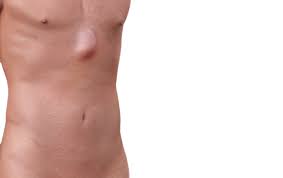
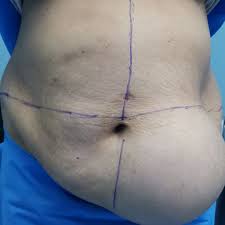
Inguinal Hernia: An inguinal hernia occurs at the pubic bone when some tissues of internal abdominal organs, such as the intestines, protrude through a weak point in the abdominal muscles. This type of hernia does not resolve on its own and can lead to life-threatening complications. Therefore, surgical repair of an inguinal hernia is recommended when it increases in size. The protruding swelling is painful and accompanied by several symptoms and signs, including:
1- Pain and burning sensation at the site of the swelling.
2- A feeling of pressure, weakness, and heaviness in the area between the abdomen and thigh.
3- Pain when lifting heavy objects, coughing, and bending forward.
4- Noticeable swelling when coughing and standing upright.
5- Swelling of the testicles, sometimes accompanied by pain.
Second:
Umbilical Hernia: The navel may protrude in many children when they cry. This is a classic sign of an umbilical hernia, a very common condition that is usually not serious.
An umbilical hernia occurs when part of the intestine protrudes, or bulges, through a weak spot in the abdominal muscle. Umbilical hernias are very common in infants, but they can also occur in adults.
Symptoms and signs of an umbilical hernia:
1. The child may experience pain.
2. The child may experience sudden vomiting.
3. The hernia area may be painful to touch, or it may appear swollen and discolored in both children and adults.
Third: Femoral hernia: A femoral hernia occurs when tissue pushes through a weak spot in the wall of the thigh muscles or the inside of the thigh.
Common causes include:
1. Excess weight
2. Excessive straining during coughing, exercise, or bowel movements.
Symptoms and Signs:
1. Sudden, severe, worsening pain around the hernia.
2. Fever.
3. Nausea.
4. Rapid heartbeat.
5. Redness of the skin around the bulge.
6. Vomiting.
Fourth: Hiatal Hernia: This is a weakness and relaxation of the stomach muscles, leading to an opening in the stomach wall that extends into the chest area and diaphragm. Over time, the hernia may enlarge, causing some fatty tissue or parts of the internal abdomen to protrude.
Symptoms and Signs:
1. Acid reflux into the esophagus and heartburn.
2. Regurgitation of food and drink into the mouth.
3. Difficulty swallowing.
4. Chest or abdominal pain.
5. Shortness of breath.
6. Vomiting blood or passing black, tarry stools, which may indicate internal bleeding in the digestive tract.
7. Frequent belching. How to diagnose and treat:
1. Upper gastrointestinal (GI) X-ray:
X-rays are taken after you drink a chalky liquid that coats and fills the lining of your digestive tract. This coating allows your doctor to see a silhouette of your esophagus, stomach, and upper intestine.
2. Upper endoscopy:
Your doctor inserts a thin, flexible tube with a light and camera (endoscope) down your throat to examine the inside of your esophagus and stomach and check for inflammation.
3. Esophageal manometry:
This test measures the rhythmic contractions of the muscles in your esophagus when you swallow. Esophageal manometry also measures the coordination and strength of the esophageal muscles.