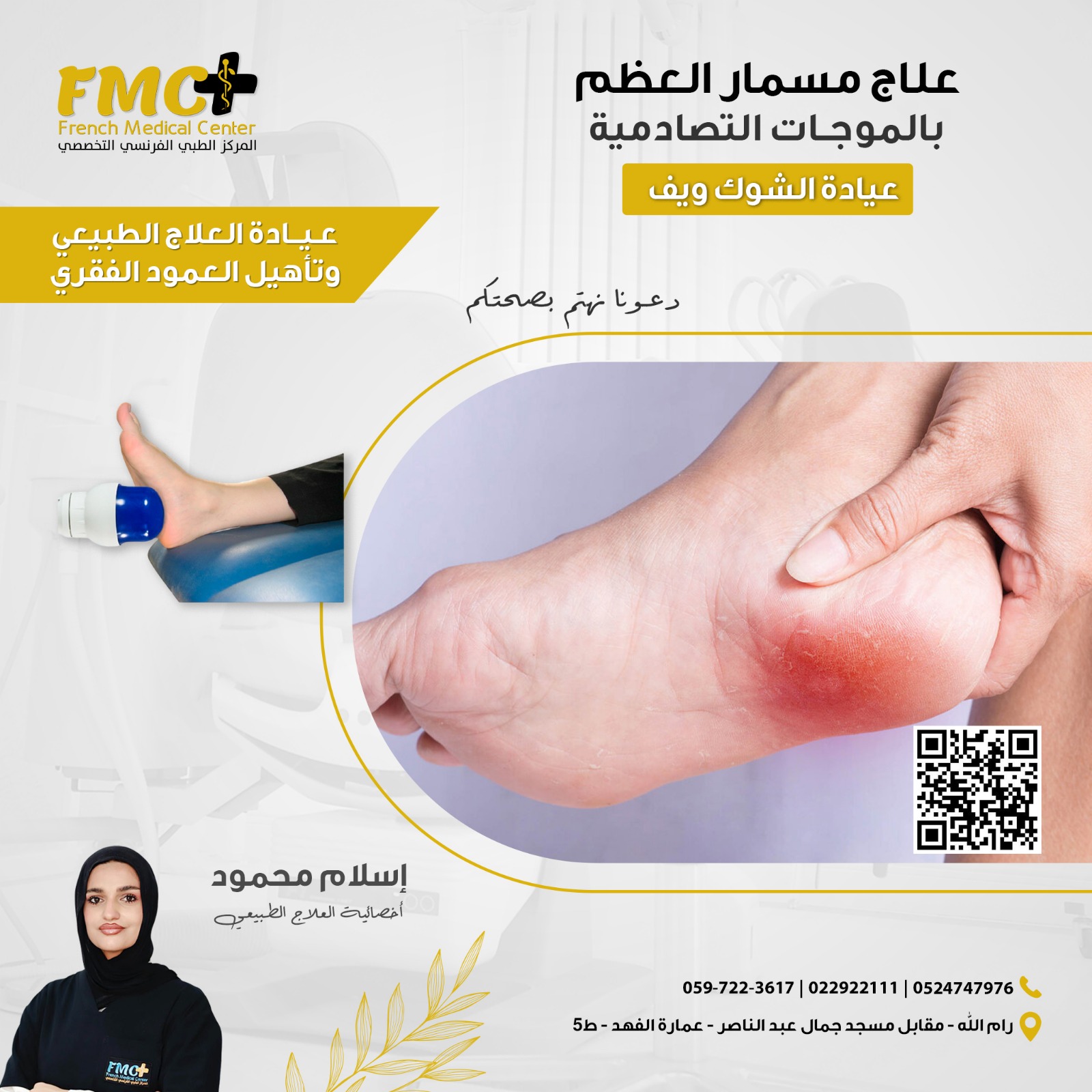
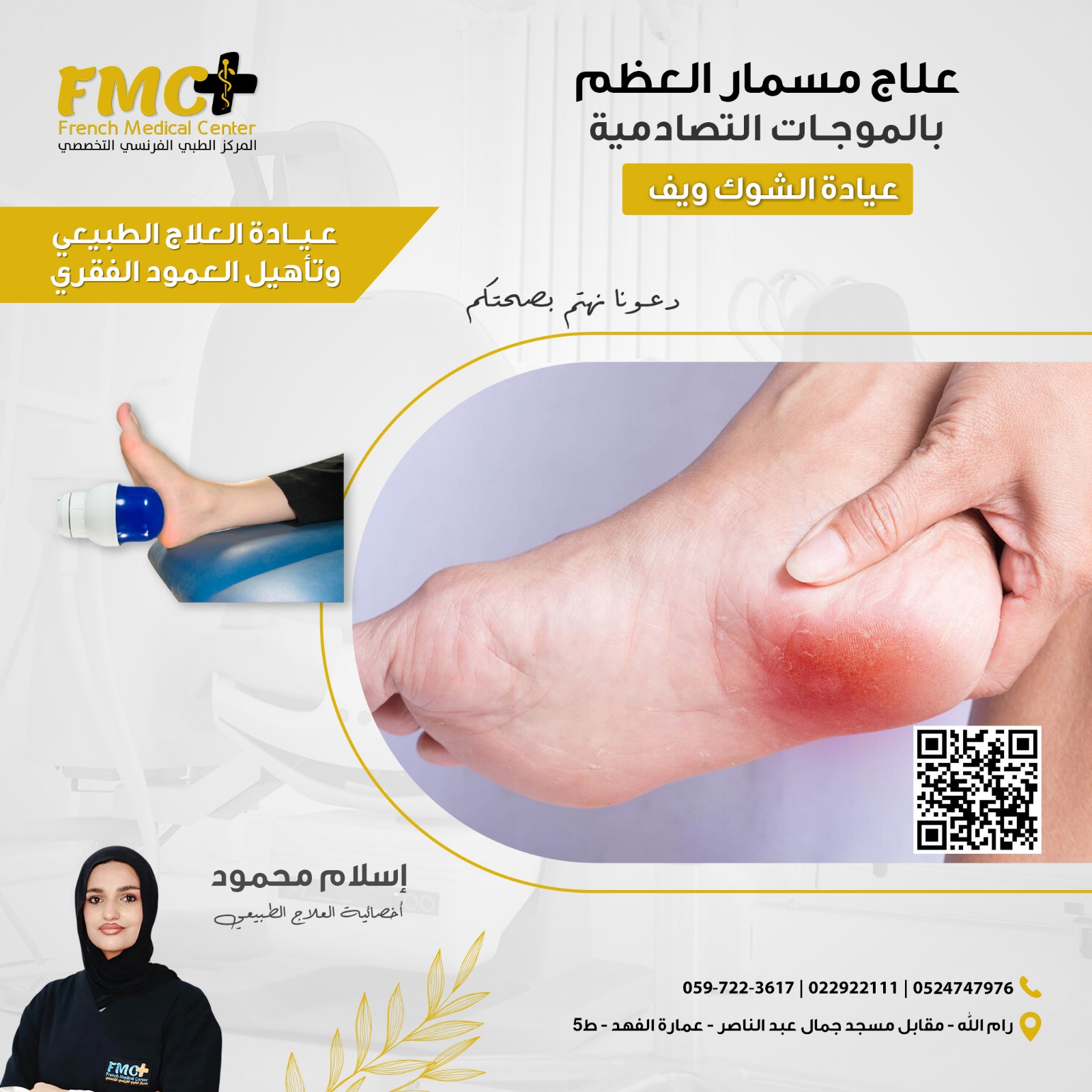
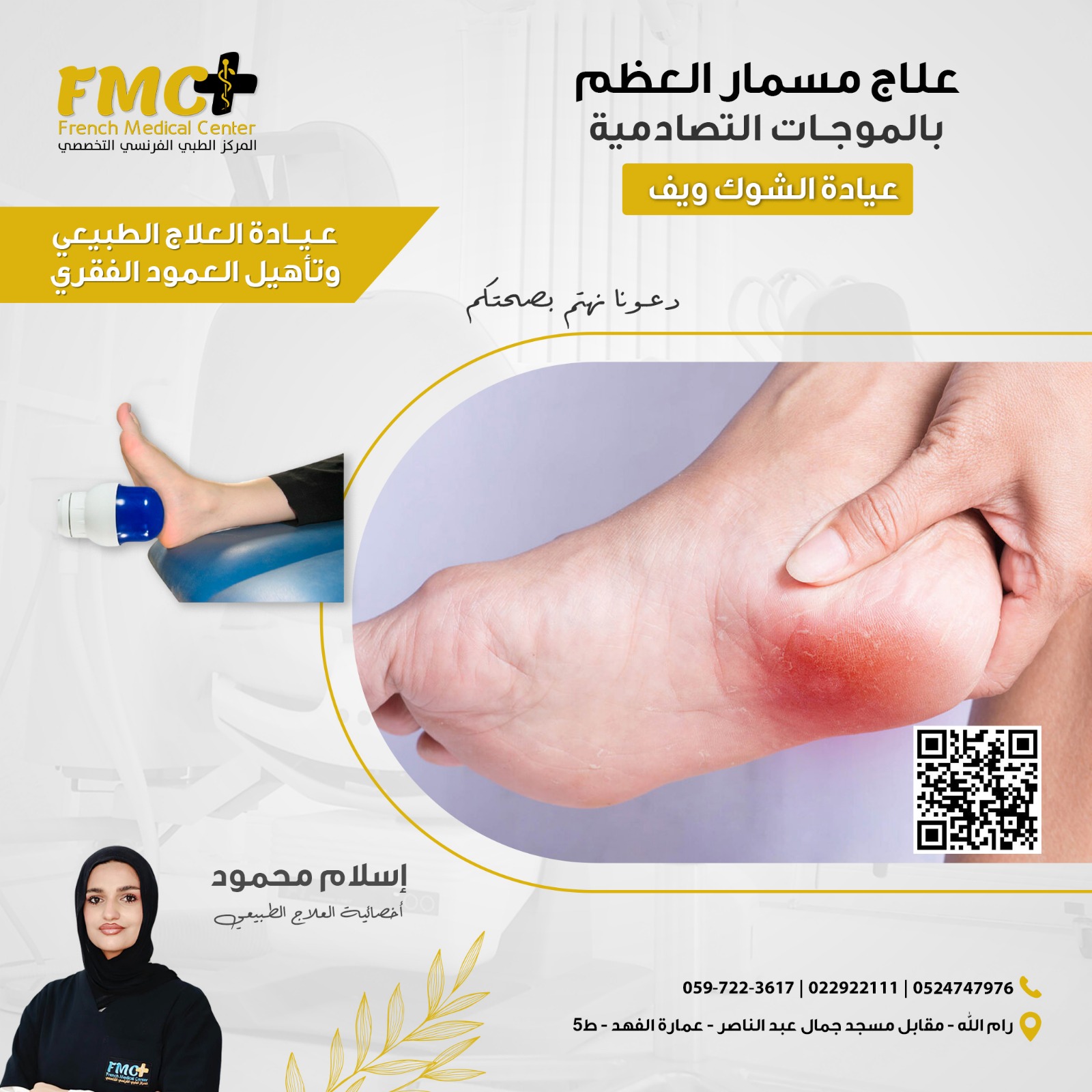
Certainly, here's a detailed explanation of shockwave therapy for heel spurs, an effective non-surgical treatment.
What is shockwave therapy for heel spurs?
It is a non-surgical treatment that uses high-energy sound waves (not electrical waves) focused on the painful area of the heel (spur) or plantar fasciitis. These waves work to:
1. Stimulate the healing process: Shockwaves create micro-trauma in the affected tissue, stimulating the body to send blood and nutrients to the area to initiate a natural repair process.
2. Break down calcifications: They help break down the calcium deposits that have formed, allowing the body to reabsorb them.
3. Inhibit pain signals: They disable the nerve receptors that send pain signals to the brain.
4. Reduce inflammation: They improve blood circulation to the area, helping to reduce inflammation and swelling.
Types of Shock Waves Used:
1. Focused Shock Wave Therapy (ESWT):
· How it works: The energy of the shock waves is focused on a very small, deep point at the site of pain.
· Effect: More powerful and is primarily used to break up calcific deposits (the bone spurs themselves). It usually requires local anesthesia due to the severity of the pain during the session.
2. Dispersed Shock Wave Therapy (Radial ESWT):
· How it works: The energy is spread over a wider surface area.
· Effect: Less powerful and focuses on treating plantar fasciitis and the surrounding soft tissue. It usually does not require anesthesia.
Who is a good candidate for this treatment?
This treatment is typically recommended for patients who:
· Have not responded to other conservative treatments (such as pain medications, stretching exercises, ice, orthotic insoles, and rest) for at least 3 to 6 months.
· Have chronic, recurring heel pain.
· Want to avoid surgery and its complications.
Treatment Steps:
1. Diagnosis: The doctor diagnoses your condition and confirms that the cause of your pain is a bone spur or plantar fasciitis.
2. Pain Location: The painful points are precisely identified using an ultrasound device or direct pressure.
3. Gel Application: A medicated gel is placed on the heel area to facilitate the transmission of sound waves.
4. Treatment Session: The doctor passes the device head over the painful area, emitting shock waves. The session takes approximately 15-30 minutes.
5. Number of Sessions: Typically, three sessions are required, spaced one to two weeks apart.
What to Expect After the Session?
· Immediately after the session: You may experience some pain, discomfort, or mild numbness in the area, which is normal.
· Improvement: Improvement begins gradually. Some patients feel better after several days, while others may need several weeks. Maximum improvement is typically seen three months after the sessions.
· Activity: You can return to your normal activities immediately after the session, but it is recommended to avoid high-impact activities (such as running) for a few days.
Success Rate and Effectiveness:
The success rate of shockwave therapy in relieving heel spurs and plantar fasciitis ranges from 60% to 80%, making it an effective option for many patients.
Advantages:
Non-surgical: No incisions or stitches.
Does not require hospitalization (performed in the office).
Very short recovery time.
Fewer complications compared to surgery.
Effective for chronic conditions that have not responded to other treatments.
Disadvantages and Potential Complications:
Pain during the session: Especially with the focused type.
Bruising, swelling, or numbness: Temporary in the treatment area.
Skin redness.
Ineffectiveness of the treatment in some cases: There is no guarantee of 100% recovery.
Alternatives to treating bone spurs:
Conservative treatments: (rest, ice, stretching exercises, anti-inflammatory medications, orthopedic insoles, local cortisone injections).
Physiotherapy.
Surgery: This is a last resort when all other treatments fail.
Conclusion:
Shockwave therapy is a safe and effective option for treating bone spurs and chronic plantar fasciitis. It is an intermediate step between simple conservative treatments and surgery. Consult your orthopedic specialist to determine if you are a suitable candidate for this type of treatment based on your specific health condition.
Important: This information is for educational purposes only and does not replace the advice of a specialist physician for diagnosis and appropriate treatment.