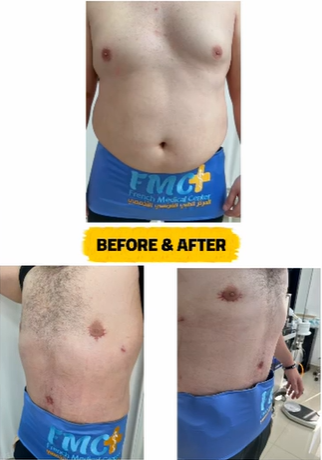
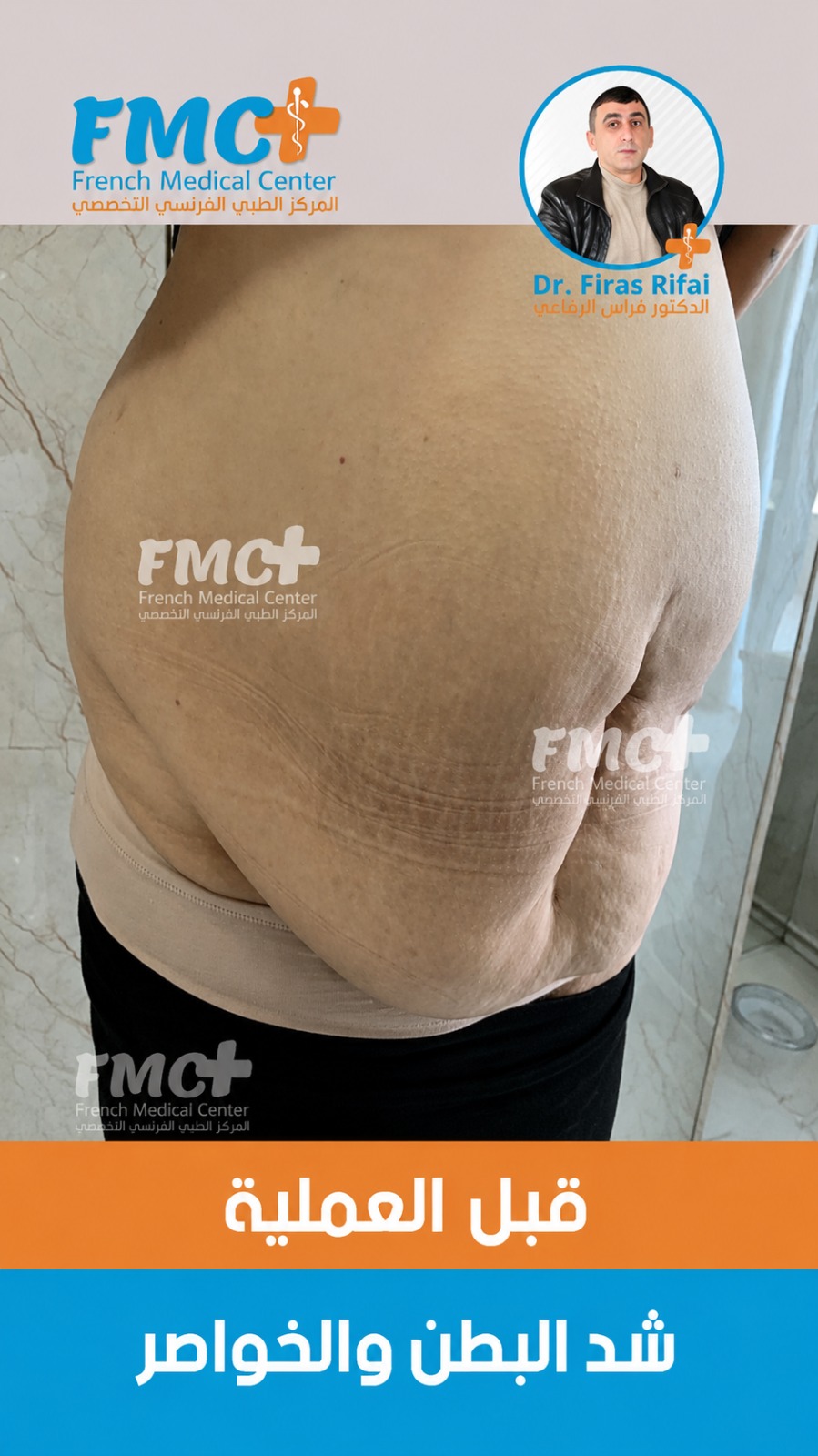
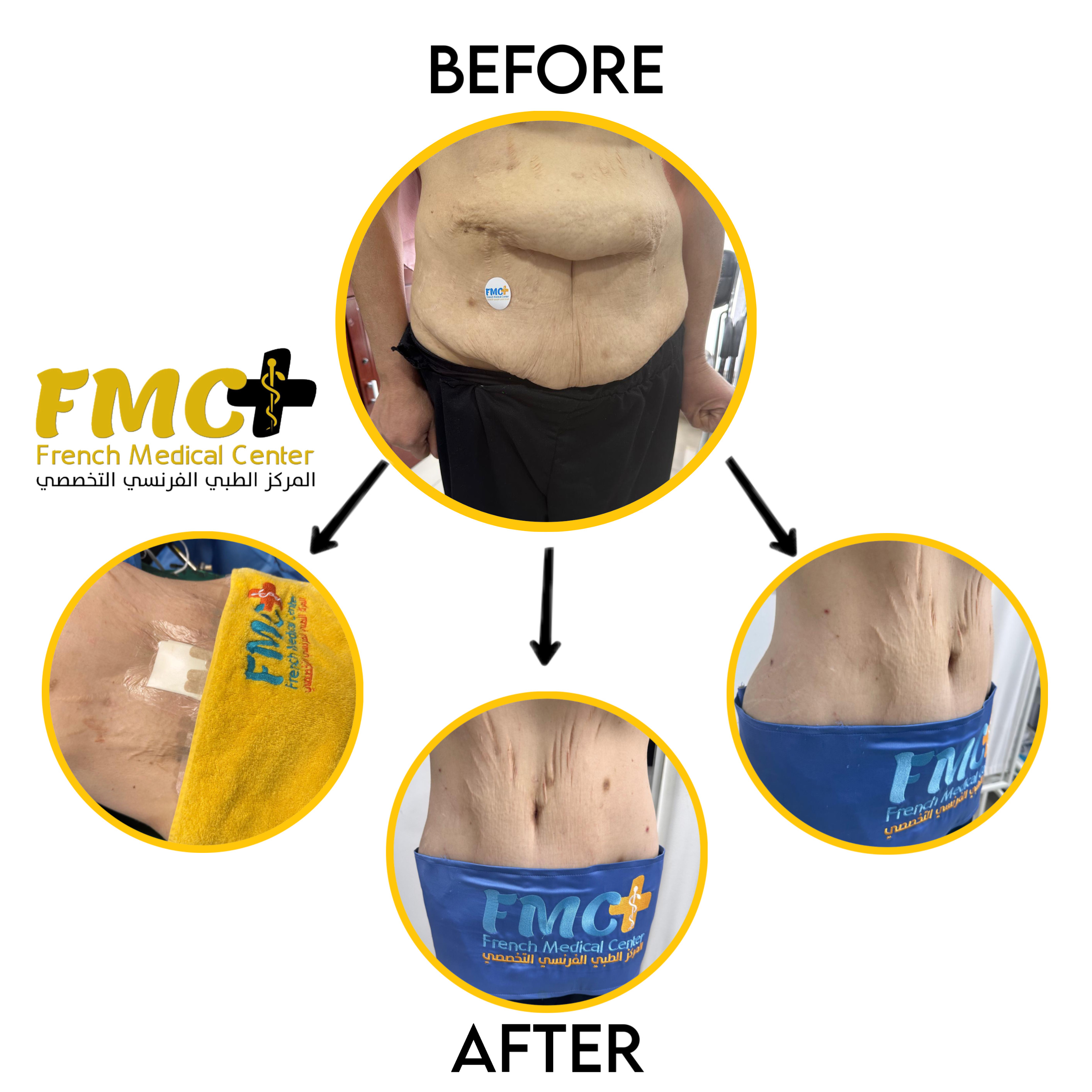
Your journey to the perfect figure begins with a single step... and is completed with commitment!
A tummy tuck is not just a cosmetic procedure; it's the beginning of a new lifestyle, full of confidence and vitality. Because your health and safety are our top priority at our surgical cosmetic clinic, Dr. Firas Al-Rifai (General and Cosmetic Surgeon) offers you the golden guide to the most important tips for a safe recovery and ideal results:
- Rest and nutrition: Make sure to rest completely during the initial period, while paying attention to your overall health and eating a healthy, balanced diet to help your body recover.
- Medication adherence: Take pain relievers and anti-nausea medications as needed and regularly, in addition to the prescribed antibiotics to prevent any infection.
- Surgical compression garment: Wear the medical compression garment (corset) for at least 6 weeks; it's the secret to sculpting your figure and reducing swelling.
- Avoid smoking and blood thinners: Completely stop smoking and avoid taking blood thinners for two weeks before and after the procedure to ensure proper wound healing.
- Gentle Movement: Avoid inactivity! Gentle movement and occasional walks during the initial recovery period help drain excess fluids and prevent blood clots in the legs (God forbid).
🩺 Let's take care of your health... and together we'll help you regain your confidence.
Address: Ramallah - Opposite Jamal Abdel Nasser Mosque - Al-Fahd Building - 5th Floor
Contact Numbers: 059-722-3617 | 022922111 | 0524747976
French Specialized Medical Center - http://fmc.ps
#Dr_Firas_Alrifai #TummyTuck #BodyContouring #BodySculpting #CosmeticSurgery #YourHealthFirst #CosmeticProcedures #SafeRecovery #Ramallah #Palestine
There are several reasons why you might develop excess fat, poor skin elasticity, or weak connective tissue in your abdomen. These include:
1. Changes in abdominal weight
2. Pregnancy
3. Abdominal surgery, such as a cesarean section
4. Aging
5. Your natural body type
A tummy tuck carries several risks, including:
Leaving the drainage tubes in place after surgery can help reduce the risk of excess fluid buildup. Your doctor may also remove fluid after surgery using a needle and syringe.
Sometimes, areas along the incision line may not heal properly or may begin to separate. You may be given antibiotics during and after surgery to prevent infection.
The scar from a tummy tuck is permanent, but it's usually along the bikini line so it can be easily concealed. The cause and severity of irritable bowel syndrome (IBS) vary from person to person.
During a tummy tuck, deep fatty tissue under the skin in your abdominal area may be damaged or die. Smoking increases the risk. The tissue may heal on its own or require further surgery depending on the size of the area.
The repositioning of abdominal tissue during a tummy tuck can affect the nerves in the abdominal area and, rarely, alter the shape of the upper thighs. You may experience some tingling or numbness. This usually diminishes in the months following the procedure.
A tummy tuck takes one to two hours and is performed as follows:
1. The abdominal area is thoroughly sterilized, then a horizontal incision is made in the lower abdominal wall, passing through the skin and reaching the abdominal muscles.
2. Sutures are used to reinforce the abdominal muscles, and then excess skin is removed.
3. The subcutaneous layer is sutured to ensure even skin tightening along the abdominal wall.
4. The incision is closed using special sutures, and dressings are applied.
5. A drain is left inside the incision to remove secretions, residual fluids, and blood from the tissues.
There are two types of tummy tuck surgery, differing in the technique used and the amount of skin removed.
This procedure removes excess fat and skin from the abdomen below the navel. It also tightens weakened abdominal muscles and repositions the belly button.
This is a simpler procedure than a full tummy tuck because it focuses on removing excess skin below the navel without repositioning the belly button. It may also include tightening the abdominal muscles in the lower abdomen.
Women who experience abdominal sagging after multiple pregnancies and childbirth, as this is often accompanied by weakened abdominal muscles, are among the most likely candidates for a tummy tuck.
Also, patients with morbid obesity who have undergone various bariatric surgeries, such as gastric sleeve or mini gastric bypass, and have achieved significant weight loss, are also candidates. Patients with mild localized obesity in the abdominal area who have not responded to diet or exercise are also candidates for a tummy tuck.
Who are not suitable candidates for a tummy tuck?
Many patients benefit from a tummy tuck, but there are several for whom it may pose a problem, and it is preferable to address their health issues before undergoing the procedure:
1. If you are severely obese, it is best to lose excess weight through appropriate bariatric surgery before undergoing a tummy tuck.
2. It is preferable to postpone pregnancy for one to two years after a tummy tuck. Therefore, if you are planning to become pregnant soon, it is advisable to postpone the tummy tuck until after your pregnancy.
3. If the patient suffers from any chronic illnesses, they must ensure that these conditions will not pose a risk to the tummy tuck by consulting their doctor.
4. If you are a smoker, you must quit smoking at least one month before the procedure.
complete blood count, blood chemistry test, coagulation tests, and elderly patients may be asked to undergo a chest X-ray.