Contact Us For Support
drfirasrifai@gmail.com
Address
Ramallah – Al-Fahd Commercial Center, 5th Floor, Downtown – Al-Bireh, opposite Jamal Abdel Nasser Mosque

category photo
Description

What is a breast tumor removal procedure for women?


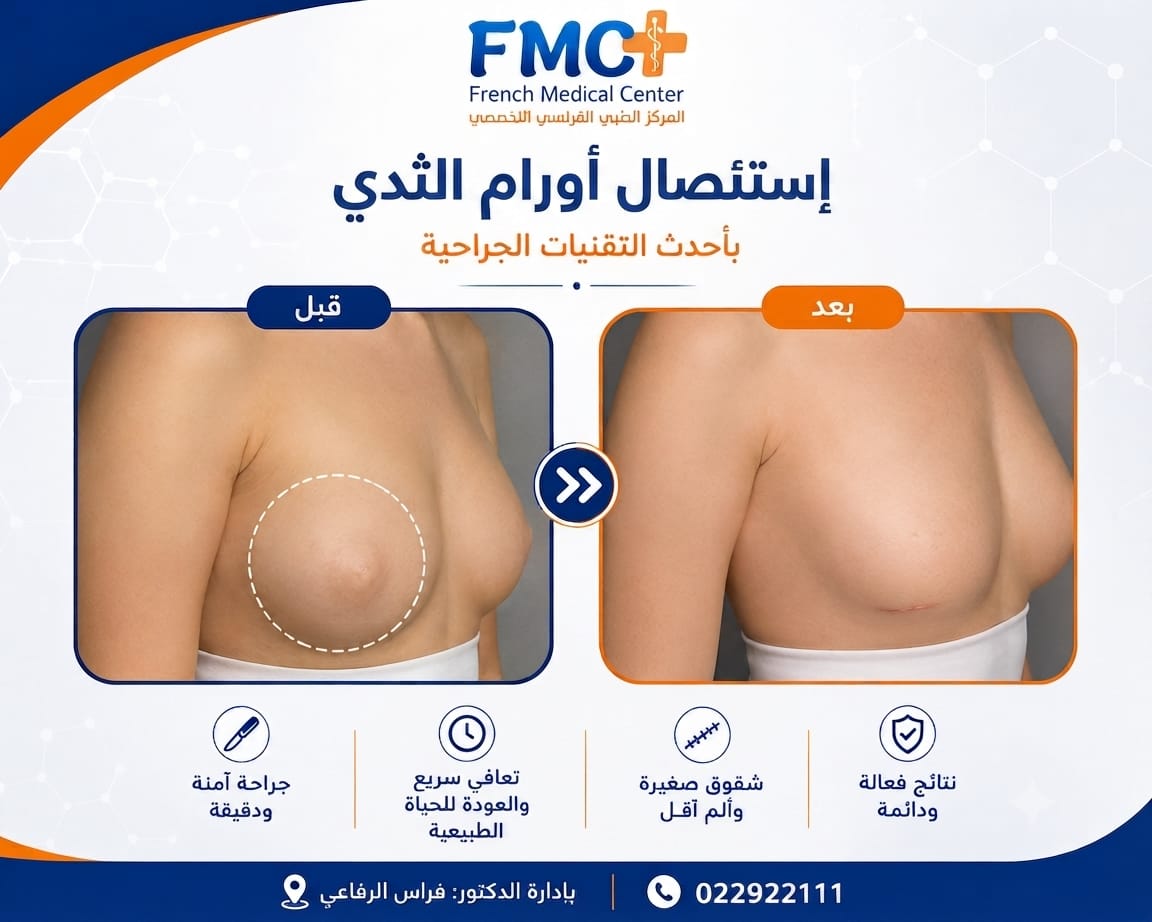
A breast tumor removal surgery is performed under general anesthesia. The area around the breast is sterilized, and an incision is made after the tumor's location is determined using imaging before the procedure. Afterward, it is determined whether the tumor is benign or malignant. If it is benign, the doctor removes the tumor completely and then closes the incision, preserving the breast's aesthetic appearance.


What are the symptoms of breast tumors?


Breast tumors result from abnormalities in breast cells, leading to the formation of benign, rubbery lumps. Over time, these lumps can transform into malignant tumors that begin to spread to the breasts and the rest of the body. Therefore, early detection and screening protect women from many complications and harm. Breast tumors are divided into benign and malignant types, and the symptoms also vary between malignant and benign breast tumors. In fact, a large number of women diagnosed with benign breast tumors reported not noticing any symptoms or unusual signs. Therefore, we always recommend regular checkups for early detection of any tumors should symptoms appear, allowing for prompt surgical removal of benign breast tumors. However, this does not negate the existence of certain signs characteristic of each type of breast tumor, which begin to appear depending on each woman's body and the stage of the tumor.

Causes of breast tumors:


Genetic factors or a family history of breast cancer.


Advancing age.


Genetic changes or mutations, such as BRCA1 and BRCA2.


Hormonal imbalances or changes.


Obesity and lack of physical activity.


Smoking and alcohol consumption.


Exposure to radiation therapy to the chest area at a young age.


Some tumors may appear without a clear cause or known risk factor.

What are the types of breast tumor removal surgeries?


First: Tumor biopsy: A biopsy of the tumor and breast tissue is a diagnostic procedure used to determine whether the tumor is benign or malignant. It is performed under local or general anesthesia. After the biopsy results are available, the doctor will determine the most appropriate treatment for the patient's condition. Second: Tumor excision: If a benign breast tumor is confirmed, a complete surgical procedure is performed to remove the tumor, especially if it is large. Removal is necessary to prevent it from becoming malignant. Third: Mastectomy (or double mastectomy): Unfortunately, this type of surgery is used when malignant breast tumors are confirmed and cancer is diagnosed. The most effective and rapid treatment is to remove the breast along with the tumor to protect the other breast and the rest of the body. The procedure is performed under general anesthesia, after which the patient begins their treatment protocol.

There are several ways to detect breast tumors, both benign and malignant. These methods can be divided into: 1- Regular self-examination at home: Every woman over the age of twenty should perform a monthly breast self-examination in front of a mirror at home. This allows for regular monitoring of her health and early detection of any lumps, masses, or abnormalities in the breasts, ensuring prompt medical intervention and treatment. 2- Physical examination by a doctor: This step is necessary if a woman feels something abnormal in her breasts, such as a lump, swelling, or severe and unbearable pain. In this case, the doctor will perform a physical examination to determine the nature of the complaint and whether it is indeed a sign of breast tumors or a false alarm or a normal symptom due to other factors, such as the period before and after breastfeeding. 3- Breast MRI: After a doctor confirms the presence of a breast tumor or palpates any lumps, an MRI is necessary to obtain a more detailed view of the tumor's shape and cause. This procedure is only performed at the request and under the supervision of the treating physician, and is generally recommended for women under 40 years of age. 4- Mammogram: Mammograms are generally recommended for women over 40 and should be performed every one to two years, or at least once, to protect the body from radiation damage, as long as the diagnosis of breast cancer is not yet confirmed. Mammograms clearly show the presence of tumors because they provide a detailed and focused view of breast tissue. 5- Breast Biopsy: After examination, diagnosis, and confirmation of a tumor or lump in one of the breasts, a minor surgical procedure is necessary to take a sample of the tumor tissue for examination to determine whether it is benign or malignant. This allows the doctor to immediately develop an appropriate treatment plan.

>

The type of surgery depends on the size and location of the tumor and the results of examinations. Some of the most common types include: Lumpectomy: Removal of the tumor with a safe margin of healthy tissue, preserving most of the breast.


Partial mastectomy: Removal of a larger portion of breast tissue when needed.

Mastectomy: Removal of the entire breast in some cases, as determined by the surgeon.

Breast reconstruction: This can be performed during the same surgery or later, depending on the patient's condition and wishes.

Preparing for Breast Tumor Removal Surgery:


Consult your doctor for a physical examination.


Undergo any required tests, such as blood tests and breast imaging (mammogram, ultrasound, or MRI if needed).


Inform your doctor of all medications you are taking, especially blood thinners, as they may be required to stop some before surgery.


Refrain from eating and drinking for 6–8 hours before surgery if you are having general anesthesia.


Stop smoking before surgery to improve wound healing.


Follow all your doctor's instructions and attend your appointment with all required reports and tests.

><

The price of the procedure is determined after the doctor's examination at the clinic.
5.0 / 5
from 1 ratings
5 1
4 0
3 0
2 0
1 0
How would you rate this specialized clinic?
Tap the stars to choose your rating
Thanks for your rating!