


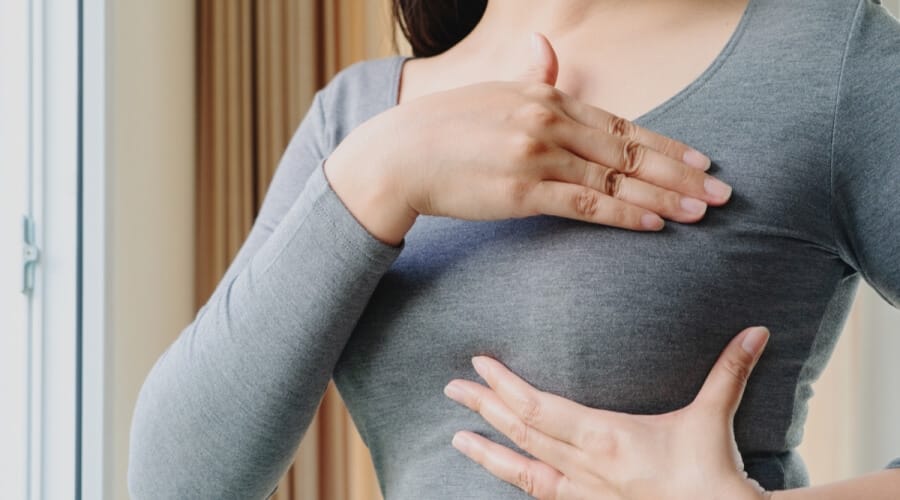
Breast cysts are benign, fluid-filled sacs that form in breast tissue. Most breast cysts do not require treatment, but they may cause discomfort or breast pain, especially before menstruation.
What are breast cysts?
Breast cysts are noncancerous, fluid-filled sacs that vary in size. They range from small cysts that cannot be felt but can be detected by ultrasound (microcysts) to larger cysts that can be palpated and are often 1-2 inches in diameter (macrocysts). A person may have multiple breast cysts at the same time. However, breast cysts do not increase the risk of breast cancer and rarely develop into more serious conditions.
Breast cysts are common in women between the ages of 35 and 50, whether they are menstruating or undergoing hormone replacement therapy after menopause.
What are the types of breast cysts?
Simple breast cyst: A benign breast cyst characterized by a smooth wall and no solid contents. Simple breast cysts make up about 90% of all breast cysts.
Complex breast cyst: This type of cyst contains both fluid and solid components. There is about a 20% risk of a complex breast cyst becoming cancerous. Doctors may recommend a tissue biopsy for further examination.
Severely complex breast cyst: This type of breast cyst has irregular edges and contains cloudy fluid. Doctors may insert a needle to drain the fluid and re-examine the cyst after six months. The risk of complex breast cysts becoming cancerous is less than 2%.
What causes breast cysts?
The breast is made up of lobes of glandular tissue arranged like the petals of a daisy. Each lobe contains smaller lobules responsible for producing milk during pregnancy or breastfeeding. These lobules are surrounded by fatty and fibrous tissue, which contributes to the variety of breast textures and sizes.
Breast cysts develop from fluid accumulation in the milk ducts, usually triggered by hormonal fluctuations during the menstrual cycle. Estrogen levels can rise before menstruation, stimulating fluid production in the milk ducts, which can lead to the formation of cysts. Additionally, breast cysts may form during menopause or periods of hormonal fluctuations, such as pregnancy or hormone replacement therapy.
What are the symptoms of a breast cyst?
A soft or firm lump in the breast that can be felt and moves when pressed or touched.
Breast pain or tenderness before menstruation.
Cysts may increase in size before menstruation and decrease in size afterward.
Clear or yellowish nipple discharge in some cases.
When should I see a doctor?
If you have a breast lump that persists for more than 1-2 months, increases in size, or if you notice skin changes in the breast area, seek medical attention.
What are the complications of breast cysts?
Breast cysts are not life-threatening, but they can grow and cause discomfort, become infected, or require aspiration for further evaluation.
How are breast cysts diagnosed?
Medical History and Physical Examination
Your doctor will ask about your symptoms and perform a physical exam to check for any breast abnormalities. If the breast lump is palpable, needle aspiration can be performed without ultrasound or mammography guidance.
Imaging Tests
Mammography can detect larger cysts or clusters of small cysts, but it may not detect tiny cysts.
Ultrasound can determine whether a breast lump is fluid-filled or solid. Areas containing fluid suggest a breast cyst, while areas with high tissue density may indicate a benign lump such as a fibroadenomas. Solid lumps may indicate malignancy, prompting your doctor to recommend a biopsy.
Needle Aspiration
Your doctor will insert an ultrasound-guided needle into the breast lump to drain the fluid. If the lump collapses after aspiration, it is likely a cyst or fluid-filled sac.
If the fluid from the breast cyst is bloodless, light yellow, or light brown, and disappears after drainage, no further testing or treatment is necessary.
If the fluid from the breast cyst contains blood and the lump does not disappear, your doctor will recommend a biopsy and send a tissue sample to a lab for analysis.
If no fluid can be obtained from the lump, it is likely solid and not a breast cyst. Your doctor will recommend imaging to determine if the lump is cancerous.
What are the treatment options for breast cysts?
Most benign breast cysts disappear on their own. Doctors may drain the fluid to relieve discomfort. Surgical removal may be recommended if a recurrent breast cyst is causing pain.
Fine-needle aspiration (FNA) is a diagnostic and therapeutic procedure. For larger cysts, your doctor may need to aspirate the fluid several times. Breast cysts can recur or new ones can form, often due to hormonal fluctuations. If a cyst enlarges or persists for more than two to three menstrual cycles, doctors will recommend further diagnostic evaluations.
Hormonal therapy: Taking birth control pills can reduce the recurrence of breast cysts, but doctors usually only recommend them for patients with severe symptoms due to potential side effects. Additionally, stopping hormone replacement therapy after menopause can help prevent the formation of breast cysts.
Surgery: Surgery is usually a last resort and is recommended for patients who experience recurrent breast cysts, whose cysts contain blood, or who show concerning signs that may indicate a more serious condition.
How can I prevent breast cysts?
Breast cysts cannot be prevented, but regular breast self-exams and annual mammograms can help.