


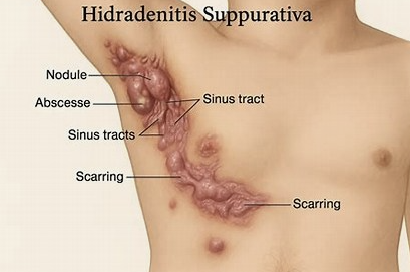
What Is Hidradenitis Suppurativa (HS)?
Hidradenitis suppurativa is an autoimmune inflammatory condition, sometimes called inverse acne. It attacks hair follicles, causing painful recurring abscesses or boils in areas rich in sweat glands.
There is no cure, but treatments can manage symptoms and prevent new boils and scarring.
Types of Skin Lesions
- Abscesses: Pockets of pus with foul odor when drained.
- Nodules: Firm lumps under the skin.
- Sinus tracts: Channels connecting abscesses to the skin surface.
Who Gets HS?
Women are more likely than men.
Risk factors include:
- Excessive hair growth
- Family history
- Hormonal fluctuations (puberty, pre‑menopause)
- Smoking
- Obesity
HS is not contagious and not caused by poor hygiene.
What Causes HS?
The immune system attacks hair follicles, causing chronic inflammation, abscesses, and scarring.
Symptoms of HS
Painful, pus‑filled abscesses that leave scars. Symptoms worsen in women before menstruation.
Common areas:
- Under breasts
- Anus
- Buttocks
- Genitals
- Armpits
- Back of neck
- Groin
- Inner thighs
- Waist
Possible Complications
- Cellulitis
- Anemia
- Scarring
- Sepsis
- Lymphatic damage
- Fistulas
- Skin cancer (very rare)
Diagnosis
A trained dermatologist at المركز الطبي الفرنسي can distinguish HS from infectious boils.
Diagnosis includes:
- Medical history
- Physical exam
Treatment for HS
Depends on severity.
1. Skin Care Plan
Dermatologist may recommend:
- Gentle skincare products
- Daily antiseptic wash
- Retinoids to reduce inflammation
2. Pain Management
Includes:
- Warm or cold compresses
- Pain relievers
- Lidocaine ointment
3. Medications
- Antibiotics
- Biologics
- Metformin
- Oral contraceptives
4. Procedures & Surgery
For severe cases:
- Incision and drainage
- Botox for excessive sweating
- Skin removal over sinus tracts
- Laser hair removal
- Laser surgery for boils
- Steroid injections
Advanced Surgery
Full‑thickness skin removal with possible grafting. RAM procedure may reduce lymphedema risk.
Living With HS
Many treatments—including newer options—help manage symptoms and improve quality of life.