


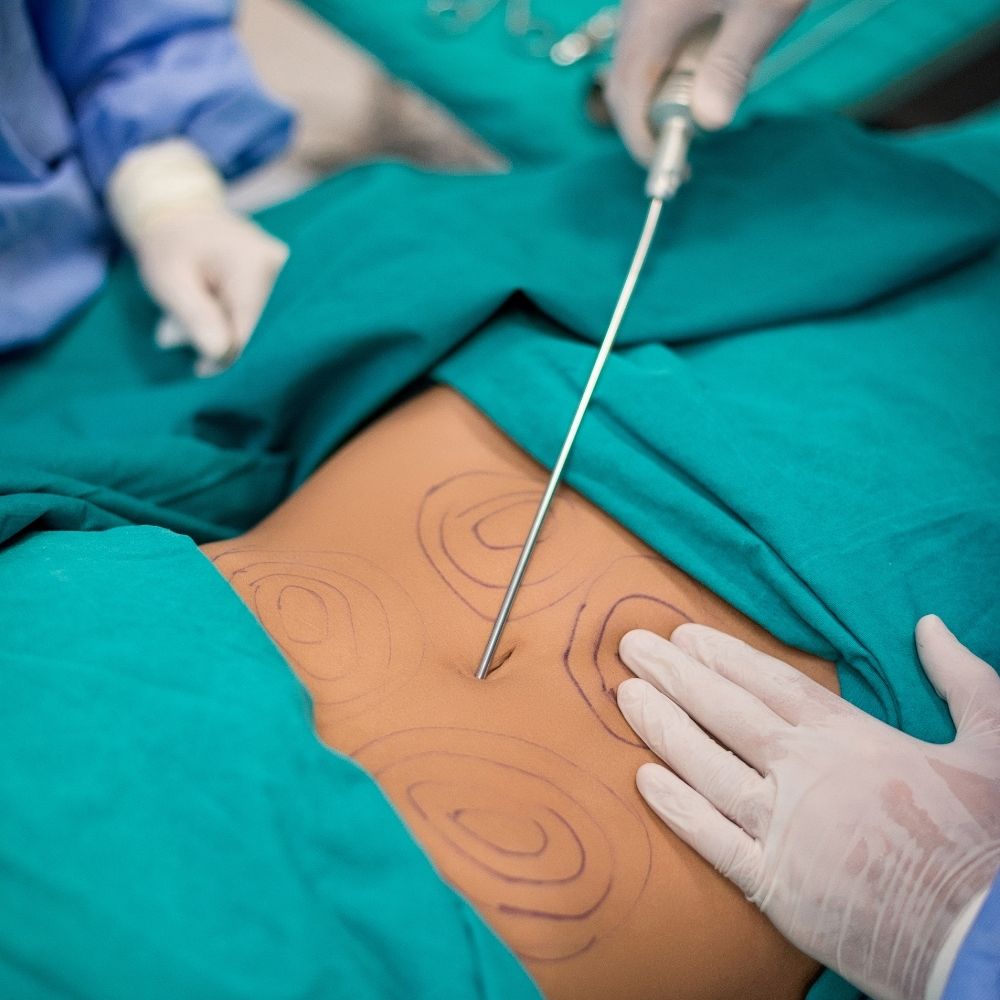
What is Liposuction?
Liposuction is one of the most common cosmetic procedures. It aims to remove stubborn fat that doesn't respond to diet and exercise in specific areas such as the abdomen, thighs, buttocks, arms, knees, chin, and others, thus contributing to a more attractive body contour.
There are several types of liposuction, each with its own advantages and disadvantages. The most well-known are VASER liposuction and laser liposuction.
Conditions for Liposuction
Anyone suffering from stubborn fat accumulation in specific areas of their body can undergo liposuction. However, certain conditions must be met to achieve the best results:
Stable and Close to Normal Weight: The person's weight should be close to normal, not exceeding 30% of their ideal weight. For example, if a person's ideal weight is 70 kg, their weight should be between 70 kg and 91 kg (no more than 30% overweight). This is because liposuction is not a treatment for obesity, but rather a method for body contouring.
Good health: The person must be in good health and not suffer from any serious medical conditions that could hinder the success of the procedure.
Skin elasticity and good muscle tone: It is preferable for the skin to be elastic and the muscles to be in good condition to adapt to the new body shape after liposuction.
Quitting smoking: It is recommended to stop smoking before and after the procedure for a period determined by the doctor, as smoking delays recovery.
Areas treated
Liposuction can be performed on most areas of the body, including:
Abdomen
Thighs
Arms
Buttocks
Hips
Neck and chin
Waist and back
Breasts
Calves
Results of liposuction
The results of liposuction last for a very long time, provided that fitness is maintained and weight is stable. If your skin is naturally elastic and firm, you will achieve a natural and smooth appearance. However, if there is sagging, a complementary procedure, such as a skin tightening procedure, may be needed to achieve optimal results.
Effects and Complications of Liposuction
The procedure is generally safe, especially when performed by an experienced cosmetic surgeon. However, as with any surgical procedure, some problems can occur in rare cases, including:
Side Effects of Liposuction
Swelling and Bruising: Swelling peaks after 48-72 hours and then gradually subsides over the following two weeks. However, swelling may persist for several weeks, and final results can take 3 to 6 months to appear.
Drainage from the incisions: This may occur during the first few days.
Numbness: You may experience numbness in the treated area, which can last for a few weeks.
Inflammation in the treated area: This can be minimized by following your doctor's instructions for wound care.
Fluid Accumulation Under the Skin: Fluid may accumulate under the skin (known as "sera") after the procedure. If this occurs, it may resolve on its own, or it can be removed with a special needle if it persists.
The Importance of Choosing the Right Surgeon
It is important to choose a cosmetic surgeon based on their medical record and professional experience. At the French Specialized Medical Center, Dr. Firas Al-Rifai, our team of expert surgeons offers the latest body sculpting techniques to give you the best results with minimal risk.
Preparing for Liposuction
First, the surgeon will discuss the liposuction procedure with you, explaining how it will be performed in simple terms and what results you can expect.
Several tests will be conducted to ensure you are in good health and eligible for the procedure.
You may be asked to stop taking certain medications that increase bleeding before the procedure, such as aspirin and blood thinners.
You may be asked to fast the night before the procedure.
How Liposuction Works
In short, liposuction, in all its forms, involves injecting fluids into the treatment area through a thin cannula. This breaks down or liquefies the fat, and then the fluids, along with the liquefied fat, are suctioned out.
The following is a detailed breakdown of the procedure steps:
Anesthesia: The type of anesthesia depends on the area being treated. It is usually general anesthesia, but regional or local anesthesia may be used for procedures on specific or small areas.
Incisions: Small incisions, less than 1 cm in diameter, are made in the skin to insert the cannula (a thin tube) into the area of fat.
Fluid Infusion: A solution containing a local anesthetic and medications to reduce bleeding and swelling is injected. This solution also helps to soften the fat and facilitate its breakdown.
Fat Cell Dissolving: This step varies depending on the type of liposuction used. Different methods use different energy sources to break down the fat, such as ultrasound (VASER), laser, or others.
Fat-Lipidized Fluid Suction: After the fat has been broken down, it is suctioned out through the cannula.
Drainage: Any excess fluid will be suctioned out. Tubes may be inserted to drain any bleeding or excess fluid from the procedure and will remain in place for several days.
Recovery After Liposuction
First 3 Days After the Procedure
The area will be wrapped with a compression garment or special dressings to help reduce swelling and pain and to shape the area symmetrically.
It is normal for fluid mixed with blood to drain from the incision initially, then clear up. Tubes may also be inserted to drain fluids (your doctor will give you all the instructions about these tubes and when they can be removed).
There will be some pain—moderate in the area—but it can be relieved with prescribed pain medication.
It is important to rest as much as possible and avoid strenuous activity during these days.
Weeks 1-2
Swelling and bruising will persist but will gradually subside during this period.
You can return to work and light daily activities, but avoid strenuous activities.
You will still need to wear compression garments during this time.
Your doctor may recommend lymphatic drainage massage to help move excess fluid and reduce post-operative swelling, thus speeding up recovery.
Weeks 3-5
Swelling begins to subside noticeably, but may persist for several months.
Results begin to appear gradually and continue to improve.
Usually, during this period, your doctor will allow you to return to more strenuous activities normally.
Week 6 and beyond
Most of the swelling disappears and Bruising is common, but some mild swelling may persist in some cases.
Usually, after 6 weeks, your doctor will allow you to stop wearing the compression garment you've been wearing all the time.
Long-term recovery (3-6 months):
Any remaining swelling will completely disappear.
The final result of the procedure will be visible.
It's important to follow a healthy diet, exercise regularly, and adhere to any other instructions from your doctor to maintain the results.
Does fat return after liposuction?
Liposuction helps to permanently remove fat. However, maintaining a healthy weight after the procedure is essential for optimal results. If you gain weight, fat may accumulate in new areas, including the treated areas, although it tends to accumulate less in these areas. This means your body can still look good even with a small weight gain.
Are there scars after liposuction?
It's rare for the procedure to leave any scars. The incisions are very small and usually fade gradually over time.
Does liposuction remove sagging skin and cellulite?
Liposuction does not tighten the skin or remove cellulite. Its primary role is to remove fat from specific areas of the body. However, newer VASER or laser liposuction techniques can help tighten the skin slightly, but they do not compensate for significant sagging.