


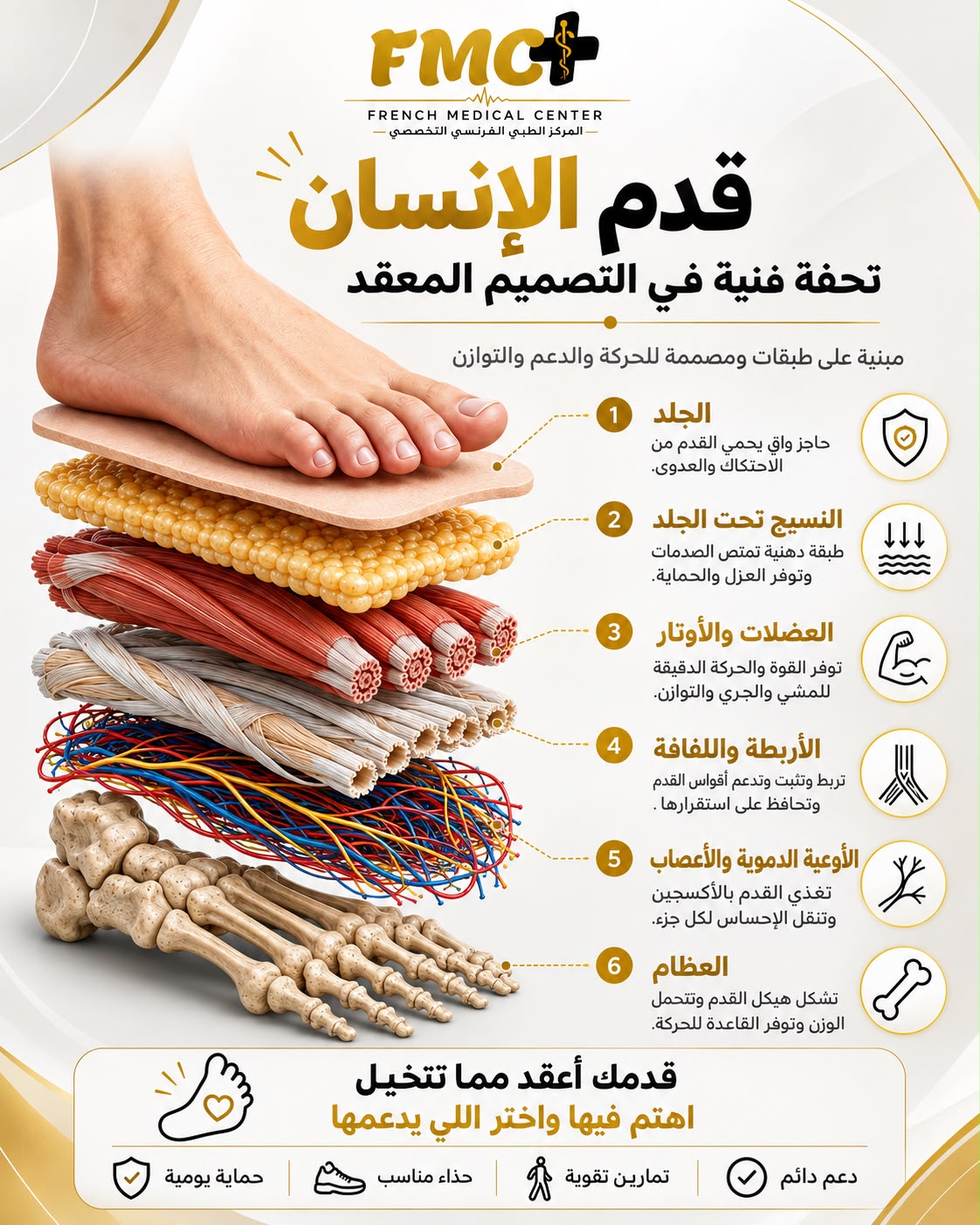
🦶 Flat Feet (Pes Planus): Understanding, Diagnosis, and Treatment
Overview
Flat feet, also known as pes planus, occur when the arch of the foot collapses, causing the entire sole to touch the ground. This condition can be flexible (the arch appears when not bearing weight) or rigid (the arch remains flat even when off the ground).
Types of Flat Feet
| Type | Description | Common Features |
|---|---|---|
| Flexible Flat Feet | The arch appears when sitting or lying down but flattens when standing. | Usually painless, common in children and young adults. |
| Rigid Flat Feet | The arch is absent in all positions. | May cause pain, stiffness, or limited motion. |
| Acquired Flat Feet | Develops later in life due to injury or tendon dysfunction. | Often linked to posterior tibial tendon weakness. |
Causes
Flat feet can result from:
- Genetic predisposition
- Ligament laxity
- Muscle weakness or imbalance
- Injury or trauma
- Neurological or connective tissue disorders
- Aging and obesity (increased load on the arch)
Symptoms
- Foot fatigue or pain, especially in the arch or heel
- Swelling along the inner ankle
- Difficulty standing for long periods
- Altered gait or posture
- Knee, hip, or back discomfort due to misalignment
Diagnosis
Diagnosis involves:
- Physical examination: Observing the arch while standing and sitting.
- Footprint test: Identifying arch collapse.
- Imaging: X‑rays or MRI to assess bone and tendon structure.
- Functional tests: Evaluating flexibility and muscle strength.
Treatment Options
Most cases of flexible flat feet require no intervention unless symptomatic.
Conservative Management
- Orthotic insoles to support the arch
- Physiotherapy to strengthen foot and leg muscles
- Stretching exercises for tight Achilles tendon
- Proper footwear with good arch support
- Weight management to reduce pressure on the feet
Surgical Treatment
Reserved for severe or painful cases, especially when associated with posterior tibial tendon dysfunction or rigid deformity.
Prognosis
Flexible flat feet are generally harmless and often improve with age or supportive care. Rigid or acquired forms may require medical or surgical correction to prevent long‑term complications.