


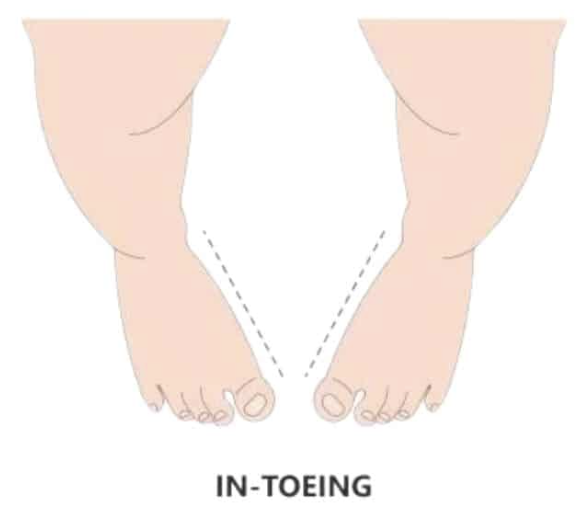
The Intoeing Dilemma – What’s Normal? What Needs Referral?
Overview
Parents often worry about how their children’s legs and feet look, especially when they notice frequent falls, clumsiness, or lower performance in sports. One of the most common concerns is intoeing, also known as being “pigeon‑toed.”
Main Causes of Intoeing
There are three primary causes:
1. Femoral Anteversion
This occurs when the upper part of the thigh bone (femur) has an increased inward twist.
Key features:
- Often runs in families (about 10% incidence)
- Children prefer W‑sitting
- Difficulty sitting cross‑legged
- Feet tend to kick outward while running
- Kneecaps (patellae) point inward
W‑sitting does not need to be discouraged — research shows it does not harm the hips, knees, core muscles, or any other structures.
2. Tibial Torsion
This is caused by inward rotation of the shin bone (tibia). The exact cause is unknown but often hereditary.
Effects:
- Children may trip more, especially when tired
- They often compensate by turning their feet outward while walking
- This outward foot position can create a false appearance of bowlegs, because the kneecaps point outward during gait
3. Metatarsus Adductus
This is an inward curve of the midfoot, which can make the entire leg appear to turn inward.
Characteristics:
- Cause is unclear; may relate to fetal position in the womb
- Usually flexible, painless, and improves naturally in the first year of life
- A rigid form exists and may need treatment, but most flexible cases do not require intervention
Natural History and Treatment
Most causes of intoeing improve gradually as the child grows. By ages 8–10, children typically reach their adult rotational alignment.
Important points:
- Some intoeing may remain, often resembling the parent who has the same trait
- Occasional tripping may occur, but most children adapt well
- No need to limit activities or sports
- Studies suggest intoeing may enhance running and jumping performance
Past treatments — such as special shoes, bars, orthotics, or twister cables — have no scientific evidence of effectiveness. Intoeing usually corrects partially or fully on its own.
When to Refer to a Pediatric Orthopedic Specialist
Referral is recommended if any of the following are present:
- Asymmetry (one leg significantly different from the other)
- Worsening of the deformity over time
- Pain that limits activity