


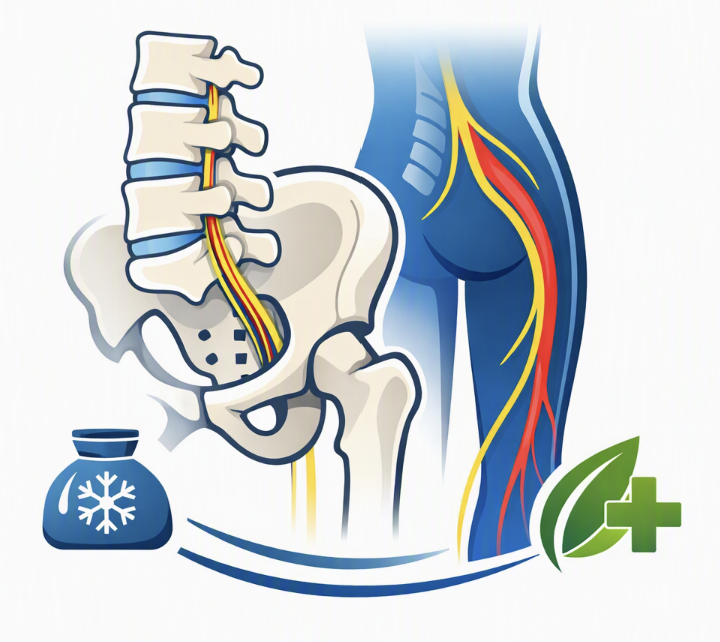
Sciatica – Overview, Causes, Symptoms, and Management
Sciatica refers to pain that radiates along the path of the sciatic nerve — the largest nerve in the body — which runs from the lower back through the hips and down each leg. It is usually caused by irritation, inflammation, compression, or injury to the nerve roots in the lumbar spine.
Causes
Sciatica commonly results from:
- Lumbar disc herniation, where a disc presses on a nerve root.
- Degenerative spine changes, including osteoarthritis and spinal stenosis.
- Spondylolisthesis, when a vertebra slips forward and compresses the nerve.
- Trauma, such as falls or accidents affecting the lower back.
- Piriformis syndrome, where the piriformis muscle irritates the sciatic nerve.
- Pregnancy, due to increased pressure on the lumbar spine.
Symptoms
Typical symptoms include:
- Sharp or burning pain radiating from the lower back down the leg
- Numbness or tingling
- Muscle weakness
- Pain that worsens with sitting, coughing, or bending
- Difficulty walking or standing for long periods
Diagnosis
Diagnosis involves:
- Detailed medical history
- Physical examination focusing on nerve function
- Straight‑leg‑raise test
- Imaging when needed: MRI, CT scan, or X‑ray
- Electromyography (EMG) in complex cases
Treatment Options
Most cases improve with conservative care, including:
- NSAIDs to reduce inflammation
- Physical therapy to strengthen core and improve mobility
- Heat and cold therapy
- Activity modification
- Chiropractic adjustments
- Muscle relaxants for severe spasms
- Epidural steroid injections for persistent inflammation
Surgical Treatment
Surgery is considered when:
- Pain persists despite conservative treatment
- There is progressive neurological weakness
- Cauda equina syndrome symptoms appear (medical emergency)
Common surgical options:
- Microdiscectomy
- Laminectomy
- Spinal decompression procedures
Prognosis
Most patients recover fully with proper treatment. Early diagnosis and targeted therapy significantly improve outcomes.